
Be Yourself
Self-Relationship Training®
Cultivating a Stronger Connection with Yourself
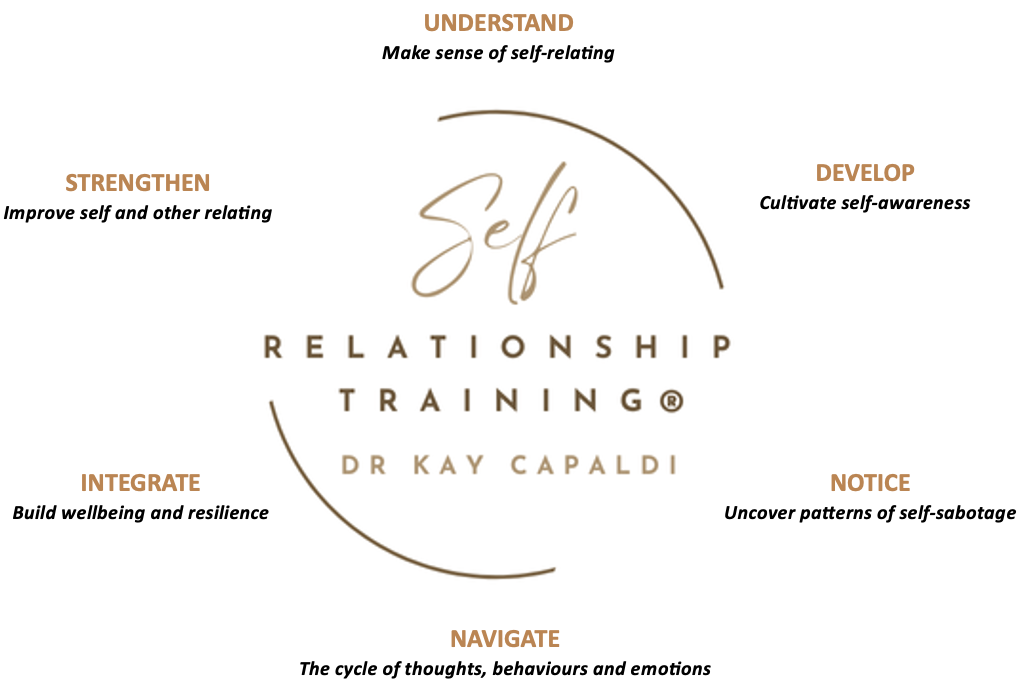
Discover a structured path to deepen your relationship with yourself through this eight-module Self-Relationship Training® programme. Designed to guide you through the complexities of your inner world, the programme invites participants to explore patterns of self-treatment and learn ways to foster a more compassionate, supportive, and affirming relationship with themselves.
Throughout the programme, you’ll have opportunities to reflect on patterns of self-dislike, identify potential sources of self-sabotage, and consider the emotional effects these patterns may have on your well-being. Engaging with the exercises and teachings can encourage greater awareness of how thoughts, beliefs, and learned responses influence your daily experience. By exploring these insights, participants often find ways to notice early signs of difficult emotions, trace them to their roots, and experiment with practices that promote gentleness, clarity, and self-understanding.
Each module blends engaging lectures with reflective exercises and immersive activities, all designed to be completed at your own pace. This flexible, self-directed structure supports meaningful personal exploration and allows participants to integrate insights in ways that feel authentic, sustainable, and relevant to their lives.
What’s Included
The programme includes 8 structured modules featuring expert-led video teaching, supported by a comprehensive workbook designed to deepen your learning at every stage. The workbook includes structured reflection prompts, practical exercises, and clear frameworks to support your personal development throughout the journey.
You will also have the option to join group support sessions, offering structured guidance, reflective discussion, and practical support in applying key concepts. These sessions are designed to help you integrate your learning into everyday life in a meaningful and sustainable way.
Personal Investment
£495 for the complete programme.
One-time payment. Lifetime access. Available immediately.
-
This introduction discusses the messy phase of healing, working with emotions safely, and creating a self-care plan. It explores how to notice and respond to emotions without suppression or overwhelm, and how to begin building simple, supportive strategies for emotional regulation.
It also highlights the role of support networks and when to seek help, alongside developing practical, personalised approaches to self-care.
-
Explore the concept of the self-relationship and how it influences thoughts, emotions, behaviours, and overall wellbeing. This module introduces a parts-based understanding of the self, supporting greater awareness of different internal states, emotional experiences, and patterns of resistance that may arise in daily life.
You will also explore the window of tolerance and the foundations of self-regulation, including how to recognise when you are within or outside your optimal emotional range and how to support a return to balance. Drawing on the neuroscience of the self, the module builds understanding of how the brain and nervous system shape emotional and relational responses.
-
This module explores what self-awareness is and how it develops, focusing on the capacity to observe internal experience—thoughts, emotions, sensations, impulses, and inner parts—as dynamic and shifting processes rather than fixed truths. It also introduces the limits of introspection, highlighting how simply “thinking about ourselves” can sometimes reinforce existing patterns rather than deepen understanding.
You will learn about awareness through differentiation, including identifying and distinguishing between different inner parts, and exploring how these parts interact, conflict, or withdraw. The module also examines self-interruption patterns and how they shape emotional and behavioural responses, alongside your relationship to emotions and how they are experienced, avoided, or regulated.
Overall, this section supports the development of a more integrated inner awareness, helping you recognise patterns with greater clarity and begin to bring different parts of experience into a more coherent and balanced whole.
-
This module explores the structure of Negative Treatment of Self (NTS), including how self-criticism, self-sabotage, and emotional responses interact to form repeating cognitive, emotional, and behavioural cycles. It supports you in identifying how these patterns develop and are maintained over time, and how they can impact wellbeing.
You will learn to uncover habitual patterns of self-criticism and the internal processes that reinforce them, with a focus on understanding how the NTS cycle operates in daily life. The module also introduces ways of working with and interrupting these cycles, supporting greater choice and flexibility in response.
A key focus is the introduction of self-soothing as a supportive practice, offering practical ways to regulate emotional experience and begin shifting from self-criticism toward a more balanced and compassionate inner stance.
-
This module explores the spectrum of self-attack, from subtle forms of self-dislike and doubt through to more intense and persistent self-criticism. You will be supported in recognising these patterns in your own experience and understanding how they can shape emotional wellbeing, behaviour, and self-perception.
A key focus is on mapping your specific challenges and concerns in relation to self-attack, allowing for a more targeted and personalised understanding of how these patterns operate for you. This helps to clarify where difficulties arise and how they are maintained over time.
By making these patterns clearer and more defined, this module supports a more targeted approach to developing a balanced, constructive, and compassionate inner dialogue.
-
This module explores how self-monitoring can shift into patterns of excessive control, rigidity, or internal hostility, where self-evaluation becomes harsh, punitive, or unhelpful. You will be supported in recognising how these tendencies show up in your thoughts, behaviours, and emotional responses, and how they can affect wellbeing and self-development.
A key focus is on mapping your individual patterns of control and self-monitoring, helping you to understand how these processes operate for you in specific situations. This creates a clearer picture of the internal dynamics that maintain stress, self-criticism, or over-control.
By increasing awareness of these patterns, the module supports a more balanced and flexible approach to self-regulation, encouraging gentleness, reduced internal pressure, and healthier pathways for personal growth.
-
This module explores patterns of hostile self-neglect, where attention to physical, emotional, and psychological needs is reduced or dismissed within the self-relationship. It considers how these patterns can develop in response to stress, internal strain, or long-standing relational dynamics with the self.
You will be supported in identifying and mapping self-ignoring behaviours and understanding how they show up in daily life, helping to clarify the patterns that maintain disconnection from your needs. This creates a clearer foundation for working more intentionally with these processes.
The module also introduces ways of beginning to prioritise self-care and support a more attentive, responsive, and sustaining inner relationship.
-
This module explores “hostile freedom,” where the drive for independence or autonomy can also function as a way of distancing from others and emotional connection. It considers how self-imposed separation may develop as a protective strategy, and how it can influence wellbeing, relationships, and sense of belonging.
You will be supported in identifying and mapping patterns of withdrawal or disconnection, helping to clarify when and how these tendencies arise in your relational life. This allows for a more precise understanding of the balance between autonomy and avoidance.
The module also explores how to begin holding both needs—autonomy and connection—in a more integrated way, supporting healthier relational engagement alongside a stable sense of self-direction.
-
This module builds on earlier work by supporting a more integrated and compassionate relationship with the self. Participants develop a personal case formulation to better understand their emotional and relational patterns, including how past experiences shape current responses, attachment styles, and internal narratives.
A focus is placed on attachment awareness and the development of “earned security,” supporting greater internal stability and healthier ways of relating to self and others. This includes strengthening emotional awareness and the capacity to stay present with internal experience in a regulated way.
The module also emphasises self-compassion, self-acceptance, and self-affiliation, alongside the development and maintenance of healthy boundaries. Together, these processes support greater emotional resilience, coherence, and relational balance.
-
This section supports you in continuing your self-relationship journey beyond the course content. Growth is rarely linear, and it is natural for old patterns to re-emerge along the way—these moments are part of the process rather than setbacks.
You are encouraged to keep returning to self-compassion, notice patterns with curiosity rather than criticism, and gently recommit to your development over time. Sustaining change comes through ongoing awareness, reflection, and a consistent, caring relationship with yourself.
-
The programme offers drop-in online support sessions where you can reflect on your experiences, discuss any challenges, and explore personalised ways to apply your insights in everyday life. These sessions provide a supportive space for ongoing reflection, learning, and personal growth.
Course Content
The Self-Relationship Training Programme® is a self-development educational course and is not a substitute for professional mental health support or therapy.
If you are in acute distress, please consult your GP in the first instance.
What Our Learners Say
FAQs
-
The self-relationship training programme is an online course designed to help individuals build a healthier connection with themselves. It focuses on improving self-awareness, self-compassion, and self-respect, enhancing overall well-being and the quality of relationships with one’s self and others.
-
This programme is ideal for individuals who want to:
Enhance self-awareness and self-esteem.
Cultivate emotional resilience and self-regulation.
Develop more positive relationships with themselves and others.
Overcome self-doubt, negative self-talk, self-sabotaging behaviours, or perfectionism.
-
The programme includes eight comprehensive modules covering:
The Self-Relationship - What It Is & Why It Matters.
Cultivating Self-Awareness - Understanding Self-Process Dynamics.
Negative Treatment of Self - The Cycle of Thoughts, Behaviours & Emotions.
The Extremes of Self-Attack.
Navigating Hostile Control & Self-Monitoring.
Uncovering Hostile Self-Neglect.
Distancing Through Hostile Freedom or Separation from Others.
Integrating Self-Affiliation & Self-Acceptance.
-
The course is designed for self-paced learning, allowing participants to complete it at their convenience. Each module typically requires 2–4 hours to complete.
-
Yes, the programme includes interactive activities, such as guided exercises, self-assessment tools, and reflective journaling tasks. Optional online support sessions are available upon completion of the programme for tailored guidance.
-
Unlike therapy, which focuses on addressing past trauma or mental health issues, this programme is centred on personal growth, skill-building, and enhancing self-awareness. It is not intended to replace professional therapy but can complement it.
-
Participants may experience:
Greater self-awareness, self-acceptance, and confidence.
Enhanced emotional resilience and clearer decision-making.
Insight into thought, emotion, and behaviour patterns.
Stronger communication skills and healthier boundaries.
More authentic, fulfilling relationships.
A compassionate, supportive inner dialogue.
Better self-care and alignment with personal values.
Improved overall wellbeing and a deeper sense of fulfilment.
-
Complete Self-Relationship Training Programme: £495, including all eight modules, a comprehensive workbook, practical exercises to support your personal growth, and optional online group support sessions offering structured guidance, reflective discussion, and practical support in applying key concepts.
-
Completing all eight modules is recommended to achieve the best results. The optional group support sessions offer structured guidance, reflective discussion, and practical support to help you integrate key concepts into everyday life.
-
No, the course is self-paced, allowing you to progress through the modules at a speed that suits you.
-
No formal prerequisites are required. All you need is a willingness to engage with the material and reflect on your self-relationship and personal growth journey.
Important notice: This programme is designed to support personal development and self-awareness, but it is not a substitute for professional mental health care. If you are currently experiencing significant mental health challenges, distress, or a mental health crisis, we strongly encourage you to seek support from a qualified professional before or alongside participating in the programme. Taking proactive steps to care for your mental health is a vital part of supporting your overall wellbeing.
-
Yes, participants receive:
Full access to online course content, including engaging videos and practical exercises.
A comprehensive workbook with reflective prompts and exercises to support learning.
A curated list of recommended readings for deeper exploration and continued growth.
-
While the course is self-directed, allowing you to work at your own pace, you can also take advantage of optional online group support sessions during and after the training.
These sessions offer personalised guidance to help you integrate what you have learned into your daily life in a practical and meaningful way.
Please note that while these sessions are designed to enrich your learning and support integration, they are not a substitute for professional mental health care. Seeking appropriate mental health support when needed is an important and proactive step in self-care.
-
If you find yourself experiencing distress, trauma, or other challenging emotions while engaging with the programme, it’s important to prioritise your well-being. Here are some steps you can take:
Contact Your GP: If you feel overwhelmed or require guidance, contact your GP for support and advice. They can assess your needs and recommend appropriate mental health services.
Consider Psychotherapy: If additional support is needed, reaching out to a qualified psychotherapist can provide a safe and structured space to explore and manage your experiences. Therapy can complement the programme by offering personalised help tailored to your needs.
Emergency or Crisis Support: If you are in immediate danger or require urgent support, do not hesitate to reach out to one of the following UK crisis services:
Samaritans: Call 116 123 (free, available 24/7) or email jo@samaritans.org
Crisis Text Line: Text "SHOUT" to 85258 for free, confidential support available 24/7.
NHS Mental Health Helpline: Call 111 for assistance if you're not sure where to turn.
Mind: Call 0300 123 3393 or text 86463 for mental health support and information.
In an emergency, always dial 999 or go to your nearest A&E.
The programme is designed to support your self-growth, but it is not a substitute for professional mental health care. Seeking help when needed is a proactive and empowering step in your self-care journey.
-
Click “Purchase Here” to enrol. Once your payment is complete, you will receive immediate access to the programme and a welcome email with your automated onboarding form.
The onboarding form helps us tailor your experience and ensure you get the most out of the programme. You can complete it at your convenience as you begin your journey.